In this guide
When this article was first published in January 2019, the big idea was that consumer data security was shifting “from compliance to care”: companies would stop treating privacy as a box to tick and start treating it as something customers actually value. This updated version looks back at the trends we highlighted in 2019, explains what has changed since, and finishes with practical steps you can take to protect your own data today.
The 2019 picture: from compliance to care
Data security had become steadily more important over the previous decade, to the point where businesses went to great lengths to ensure their compliance. In early 2019, Forbes suggested that the culture would shift from compliance to care. With US firms losing an average of $7.91 million per data breach according to figures widely reported at the time, companies were starting to realise that giving consumers the right technology, rather than just complying with regulations, was the way forward.
Three trends stood out back then.
Harnessing the blockchain
In 2019, blockchain was widely promoted as a tool for data security. It rose to fame as the basis of cryptocurrency, and supporters argued that its tamper-resistant records could help with things like medical records and identity. Alongside this, many consumers took comfort in physical data security tools, such as external drives and memory cards, because something tangible felt reassuring.
What changed: Blockchain has found some niche uses, but it did not become the everyday consumer security tool many predicted. Most of the real gains for ordinary users have come from simpler technologies: end-to-end encryption in messaging apps, encrypted phones and laptops by default, and better sign-in methods. Physical storage is still useful, but mainly as an offline backup rather than a security system in itself.
Altruism through licensing
In early 2019, Computer Weekly reported that BlackBerry was licensing its security technology to Internet of Things (IoT) manufacturers. This hinted at a future in which large companies shared security know-how instead of guarding it, raising the baseline for connected devices at home and on the move.
What changed: Sharing and common standards have indeed become more important. The clearest example for consumers is passkeys, a sign-in method backed by Apple, Google, Microsoft and other members of the FIDO Alliance. Passkeys replace passwords with a cryptographic key stored on your device, which makes phishing much harder. Smart home makers have also moved towards shared standards, and governments in several regions have begun setting minimum security rules for connected devices.
Governments getting smart to threats
Governments had long been aggressive about cybersecurity, but mostly to protect military assets and prevent corporate espionage rather than to protect consumers. In early 2019 there were signs of change, with the US, Canada and Poland among the countries scrutinising suspected data risks posed by foreign technology companies.
What changed: Consumer data protection law has expanded significantly. Europe’s GDPR, which came into force in 2018, became a model for laws elsewhere. Here in Kenya, the Data Protection Act was passed in 2019 and the Office of the Data Protection Commissioner (ODPC) was set up to enforce it, giving Kenyans legal rights over how their personal data is collected and used. Many other African countries have passed similar laws.
What has not changed
Some things are much the same as in 2019:
- Data breaches still happen, and stolen passwords remain one of the most common ways attackers get in.
- Phishing and scams by SMS, email, phone and social media remain the biggest everyday threat to most people. In Kenya, mobile money and SIM-swap fraud are well-known examples.
- Your behaviour still matters. The strongest technology cannot protect an account if you share a one-time code with a scammer.
Data security has been brought into sharp focus as companies realise it is a key reason consumers choose one product over another. Compliance alone is no longer enough, and the approach has to be built around the needs of ordinary people.
How to protect your data today
- Use passkeys where available. Many major services now let you sign in with a passkey instead of a password.
- Turn on two-step verification for email, social media, banking and mobile money accounts. An authenticator app is stronger than SMS codes.
- Use a password manager to create a unique, strong password for every account that still needs one.
- Keep your phone and apps updated. Updates fix security holes that attackers actively exploit.
- Never share one-time codes or PINs. Banks, mobile operators and app makers will not ask you for them.
- Review app permissions and remove apps you no longer use.
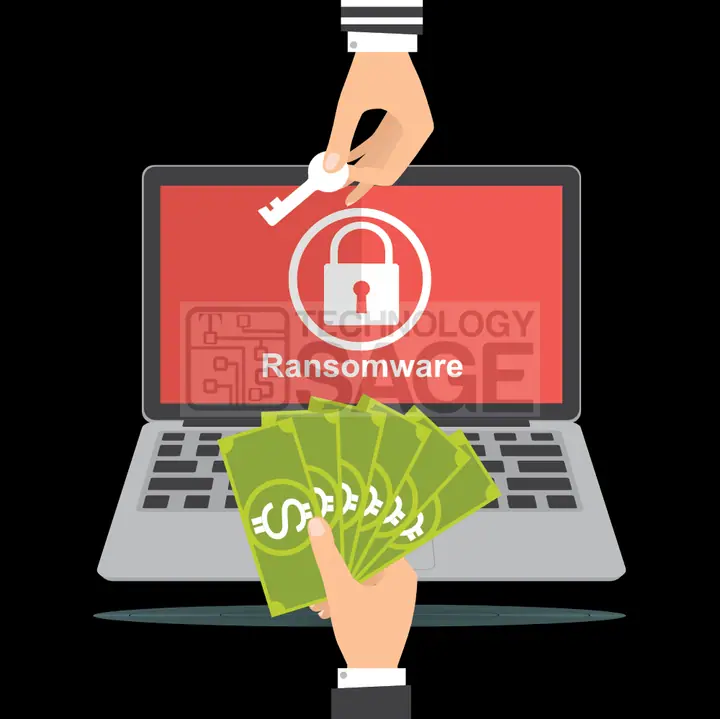
- Back up important data to a cloud service or an external drive, so a lost phone or ransomware attack does not mean lost memories.
- Know your rights. If you are in Kenya, you can ask organisations what data they hold about you and complain to the ODPC if your data is misused.
For more on keeping your phone safe, see our guide on how to protect your smartphone from viruses.
Frequently asked questions
Did blockchain make consumer data more secure?
Not in the way many predicted in 2019. It is used in some specialised areas, but everyday security improvements have come mainly from encryption, passkeys and two-step verification.
What is a passkey?
A passkey is a sign-in method that replaces your password with a cryptographic key stored on your phone or computer. You unlock it with your fingerprint, face or screen lock, and it cannot be phished in the way a password can.
Does Kenya have a data protection law?
Yes. The Data Protection Act was passed in 2019, and the Office of the Data Protection Commissioner oversees how organisations handle personal data.
What is the single most useful thing I can do to protect my accounts?
Turn on two-step verification, or use passkeys, on your email account first. Your email is often the key to resetting every other account.